
Foot drop is the inability to lift the front of the foot when walking, causing it to drag or slap against the ground, and it is a symptom that stops people in their tracks. It makes everyday activities like climbing stairs, walking on uneven surfaces, or simply crossing a room genuinely dangerous. Falls become a constant risk. Independence narrows.
For most people who develop foot drop, the diagnosis process focuses on finding the cause. And that is precisely where things can go wrong. Foot drop has many possible causes, some straightforward, some serious, but when Cauda Equina Syndrome (CES) is the true underlying cause, every hour spent investigating the wrong explanation is an hour in which permanent nerve damage may be progressing.
If you developed foot drop and were later diagnosed with CES, or if you have foot drop alongside other unexplained neurological symptoms, this page is for you. It explains the connection between foot drop and CES, how the two are clinically linked, why CES-related foot drop gets missed, and what your legal options are if a delayed diagnosis left you with permanent harm.
If you already know you are the victim of a delayed diagnosis and need legal help, learn more on our main Florida Cauda Equina Syndrome Lawyer page.
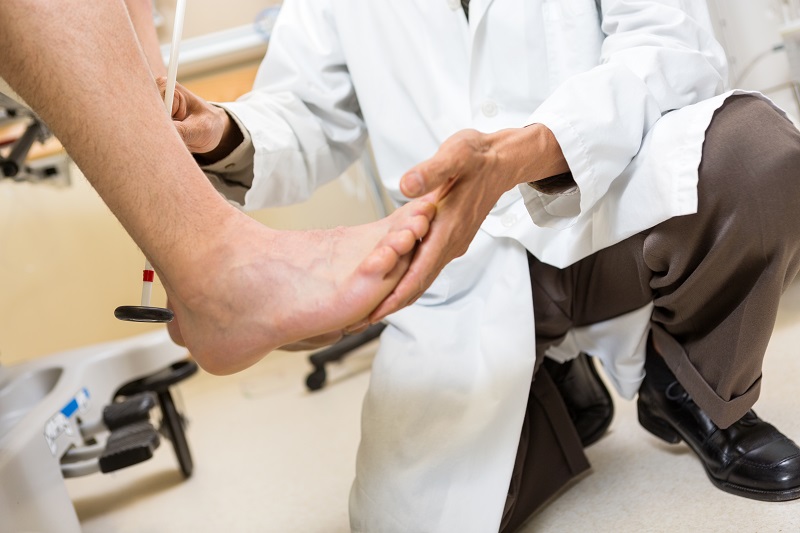
What Is Foot Drop and What Causes It?
Foot drop is not a disease itself, it is a symptom of nerve, muscle, or brain dysfunction. The specific nerve responsible for lifting the foot is the peroneal nerve, which branches off the sciatic nerve and controls the muscles in the shin that dorsiflex (lift) the foot. When that nerve’s signal is interrupted anywhere along its path from the lower spine to the foot, the ability to lift the front of the foot is lost or weakened.
The most common causes of foot drop include:
Peroneal Nerve Palsy
Compression or injury to the common peroneal nerve at the knee — often from crossing the legs habitually, prolonged squatting, a cast that is too tight, or a direct blow — is the most frequent cause of foot drop. This is a peripheral nerve injury that does not involve the spine.
Lumbar Radiculopathy (Sciatica)
Compression of the L4 or L5 nerve root in the lumbar spine, most often from a herniated disc or spinal stenosis at that level, can produce foot drop on one side. This is a common finding and is often treated conservatively with physical therapy and pain management. (Learn more about the difference between sciatica and CES).
Cauda Equina Syndrome
When multiple nerve roots of the cauda equina are compressed simultaneously, motor function to the lower limbs can be severely disrupted. CES-related foot drop occurs because the nerve signals from the compressed cauda equina can no longer reach the muscles responsible for lifting the foot. CES can cause foot drop in one foot or both feet simultaneously, and bilateral foot drop in particular is a significant red flag that demands urgent investigation.
Stroke or Brain Lesion
Upper motor neuron lesions affecting the brain can produce foot drop as part of a broader pattern of limb weakness. These are typically accompanied by other neurological signs that help distinguish them from spinal causes.
Multiple Sclerosis (MS)
MS can produce foot drop through demyelination of the nerve pathways. Like CES, MS can also produce bladder dysfunction and sensory changes, making an accurate diagnosis critical. (Read our guide on common CES misdiagnoses).
How CES Causes Foot Drop — and Why It Is Different
CES-related foot drop is clinically distinct from other causes, and that distinction matters both diagnostically and legally. When CES causes foot drop, it does so through compression of multiple lumbosacral nerve roots, not a single peripheral nerve. This means CES-related foot drop is almost never the only symptom.
It occurs in the context of a broader picture of neurological dysfunction that typically includes some combination of:
- Bladder dysfunction — difficulty urinating, urinary retention, or reduced bladder sensation.
- Saddle anesthesia — numbness or altered sensation in the perineum, inner thighs, and genitals.
- Bilateral leg weakness or sensory changes.
- Bowel dysfunction.
- Severe lower back pain.
This is the critical clinical distinction. A patient with foot drop caused by peroneal nerve compression at the knee will not have bladder dysfunction or saddle anesthesia. A patient whose foot drop is caused by CES almost certainly will have at least some of these additional symptoms, and those symptoms are the emergency red flags that demand immediate spinal imaging (MRI).
A physician who works up foot drop as a peroneal nerve injury — EMG, brace, physical therapy — without screening for the symptoms above has not ruled out CES. And CES does not wait for a follow-up appointment. The window for surgical decompression closes in hours, which is why this failure is so often the basis for a medical malpractice claim.
Bilateral Foot Drop: An Especially Urgent Red Flag
While unilateral (one-sided) foot drop from peroneal nerve palsy or single-level lumbar radiculopathy is common, bilateral foot (both sides) drop is rare and demands a very different clinical response.
Published research on acute bilateral foot drop confirms that when both feet are affected acutely (suddenly), spinal pathology including CES must be considered urgently. Clinical studies have found that patients with acute bilateral foot drop who receive surgical decompression within 48 hours have significantly better rates of motor recovery than those treated later.
A physician who attributes acute bilateral foot drop to a peripheral cause without ordering an emergency spinal MRI has made a clinically indefensible decision.
Can Foot Drop From CES Be Reversed?
The answer depends almost entirely on how quickly treatment was received. Foot drop caused by CES is a motor deficit resulting from nerve root compression.
When the compression is relieved promptly through emergency surgical decompression, the nerve roots have an opportunity to recover, and foot drop may partially or fully resolve over time, sometimes within weeks of surgery, sometimes over months or years as nerve healing progresses slowly.
When treatment is delayed and the nerve roots sustain prolonged compression, the resulting motor damage may be permanent. A patient who received surgery within 24 to 48 hours of symptom onset has a meaningfully better prognosis for foot drop recovery than one whose surgery was delayed by days or weeks due to a missed or delayed diagnosis.
This is why the timing of diagnosis matters so profoundly in CES cases. The permanent foot drop that a patient lives with after a delayed diagnosis is not simply an unfortunate outcome, it may be a direct consequence of a physician’s failure to recognize the red flags and act with appropriate urgency. (Learn more about when a delay in treatment qualifies as malpractice).
Managing Foot Drop Long-Term
For patients whose foot drop has not fully resolved following CES treatment, several management options can significantly improve mobility and quality of life:
Ankle-Foot Orthosis (AFO)
A custom-fitted brace that supports the foot and ankle in a raised position, preventing dragging and reducing fall risk. AFOs are the most widely used intervention for permanent foot drop and can allow patients to walk with much greater safety and confidence.
Functional Electrical Stimulation (FES)
A device that delivers small electrical impulses to the peroneal nerve to stimulate dorsiflexion during the swing phase of walking. FES devices can improve gait quality and reduce fatigue compared to a passive brace in appropriate candidates.
Physical Therapy
Targeted rehabilitation focused on strengthening the muscles of the lower leg, improving balance, and training compensatory gait patterns. Physical therapy is an essential component of CES recovery regardless of whether foot drop resolves completely.
Home Safety Modifications
Fall prevention is critical for patients with permanent foot drop. Removing trip hazards, installing grab rails, using non-slip flooring, and ensuring adequate lighting significantly reduce fall risk at home. (Read our full guide on living with Cauda Equina Syndrome).
Common Questions About Foot Drop and CES
Speak With a Florida CES Attorney Today
If you developed permanent foot drop after a CES diagnosis that was delayed or missed, or if your foot drop alongside other neurological symptoms was attributed to the wrong cause, you deserve to know whether that failure constitutes medical malpractice.
Levine & Levine Attorneys, P.A. has the specialized CES experience to evaluate exactly what happened in your case, what the standard of care required, and what compensation you may be entitled to recover.
Contact our office for a free, confidential case evaluation. We handle all CES cases on a contingency basis; you pay nothing unless we win.
Call us 24/7 at (954) 256-1820 or use the contact form on this page to get started.